郑雅倩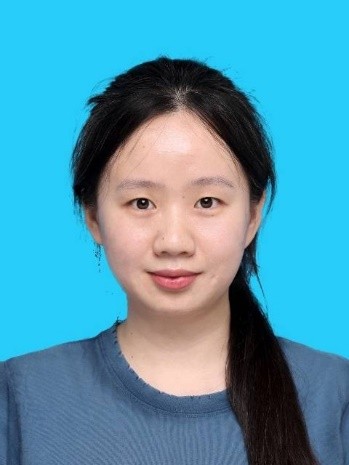
教育学博士
河北大学教育学院教育技术系讲师
邮箱:zhengyq@hbu.edu.cn
地址:河北大学教育学院悦学楼209室
研究方向:教育人工智能、学习分析与测评
招生方向:现代教育技术
招收教育技术、计算机科学等专业的硕士研究生,欢迎对“人工智能+教育”、学习分析等领域感兴趣的同学邮件联系!同时,也欢迎有科研兴趣的本科生参与研究!
教育背景
2021.9-2025.6 北京师范大学 教育技术学 博士
2014.9-2017.6 中国海洋大学 教育信息技术 硕士
2010.9-2014.6 中国海洋大学 教育技术学 本科
主授课程
本科生课程:《人工智能教育应用导论》、《人工智能与未来教育》
学术服务
担任中国教育技术学术大会评审专家
担任GCCCE 2026 English Paper Track议程委员
担任Artificial Intelligence Review、Journal of Big Data、International Journal of Machine Learning and Cybernetics、Machine Learning等期刊审稿人
学术论文
Zhang, J., Zheng, Y., Zheng, K., Fu, X., Peng, X., & He, F. (2026). TER-Net: Eye state analysis based on multi-scale feature extraction and full channel weighted coordinate attention deformable convolutional networks. Biomedical Signal Processing and Control, 111, 108262. (SCI, 中科院二区)
李艳燕,孙铭泽,郑雅倩*(通信作者).从工具赋能到认知共生:“人工智能+”课堂教学新样态[J].现代远程教育研究,2025,37(05):30-39+68. (CSSCI)
Zheng, Y., Wang, D., Xu, Y., & Li, Y. (2025). A Multigranularity Learning Path Recommendation Framework Based on Knowledge Graph and Improved Ant Colony Optimization Algorithm for E-Learning. IEEE Transactions on Computational Social Systems, 12(2), 586-607. (SCI, CCF C)
Zheng, Y., Wang, D., Zhang, J., Li, Y., Xu, Y., Zhao, Y., & Zheng, Y. (2025). A Unified Framework for Personalized Learning Pathway Recommendation in E-learning Contexts. Education and Information Technologies, 30, 7911-7948. (SSCI, Q1)
Wang, D., Zheng, Y., Li, J., & Chen, G. (2025). Parameter-Efficiently Fine-tuning Large Language Models for Classroom Dialogue Analysis. IEEE Transactions on Learning Technologies. 18, 542-555. (SCI & SSCI, Q1)
Wang, D., Zheng, Y., & Chen, G. (2024). ChatGPT or Bert? Exploring the potential of ChatGPT to facilitate preservice teachers’ learning of dialogic pedagogy. Educational Technology & Society, 27(3), 390-406. (SSCI, Q1)
Gao, L., Li, X., Zheng, Y., Li, Y., Wang, D., & Bao, H. (2024). Discourse moves and socio-emotional interactions in collaborative argumentation: Exploring how their co-occurrence impacts argumentation quality. Thinking Skills and Creativity, 52, 101525. (SSCI, Q1)
Zhang, J., Fei, C., Zheng, Y., Zheng, K., Sarah, M., & Li, Y. (2024). Trusted emotion recognition based on multiple signals captured from video and its application in intelligent education. Electronic Research Archive, 32(5), 3477-3521. (SCI)
Zhao, Y., Zheng, Y., Sun, M., & Li, Y. (2024). Exploring online collaborative learners’ socially shared regulation of learning behavior patterns in different engagement groups. International Journal of Learning and Teaching, 10(2), 255-260.
徐亚萍,李艳燕,李新,郑雅倩,唐夕人.学习情感计算研究——基于国际研究的系统性文献综述[J].数字教育,2024,10(01):1-9.
郑雅倩,李新,李艳燕等.人工智能视域下个性化学习路径推荐:机理、演进、价值与趋势[J].现代远距离教育,2023(03):39-47. (CSSCI)
Xu, Y., Li, Y., Chen, Y., Bao, H., & Zheng, Y. (2023). Spontaneous visual database for detecting learning-centered emotions during online learning. Image and Vision Computing, 136, 104739. (SCI, CCF C)
Zheng, Y., Li, C., Liu, S., & Lu, W. (2018). An improved genetic approach for composing optimal collaborative learning groups. Knowledge-Based Systems, 139, 214-225. (SCI, 中科院一区Top)
发明专利
一种多粒度学习路径推荐方法、设备、介质及产品,申请号:2024102723494,申请日:2024年03月11日
一种基于多视觉特征融合的在线学业情绪识别系统,申请号:2023111793082,申请日:2023年09月13日
软件著作权
基于迁移学习的表情识别系统V1.0,登记号:2023SR1365636
科研项目
河北省教育科学“十四五”规划2025年度青年专项课题,“人工智能赋能的初中数学课堂教师对话教学行为分析与智能反馈研究”,2025/12-2027/12,主持
河北大学高层次人才科研启动项目,“对话教学视域下教师课堂话语行为分析关键技术研究”,2026/01-2029/09,主持
新一代人工智能国家科技重大专项,“学习环境智联计算关键技术研究及应用示范”,2022/12-2026/11,参与
国家自然科学基金面上项目,“融合多模态学习分析的协作过程监测与智能反馈研究”,2023/01-2026/12,参与
北京市自然科学基金面上项目,“面向数字社会发展的智慧教育支持服务关键技术研究”,2022/01-2024/12,参与


 郑雅倩
郑雅倩